
Research journal
What is Retatrutide?
Retatrutide is suddenly everywhere: trial updates, “GLP-3” headlines and long comparison threads. Here is the straightforward story behind the triple-agonist nickname, what readers keep asking, and what the research can actually tell us so far.
Why everyone is talking about retatrutide
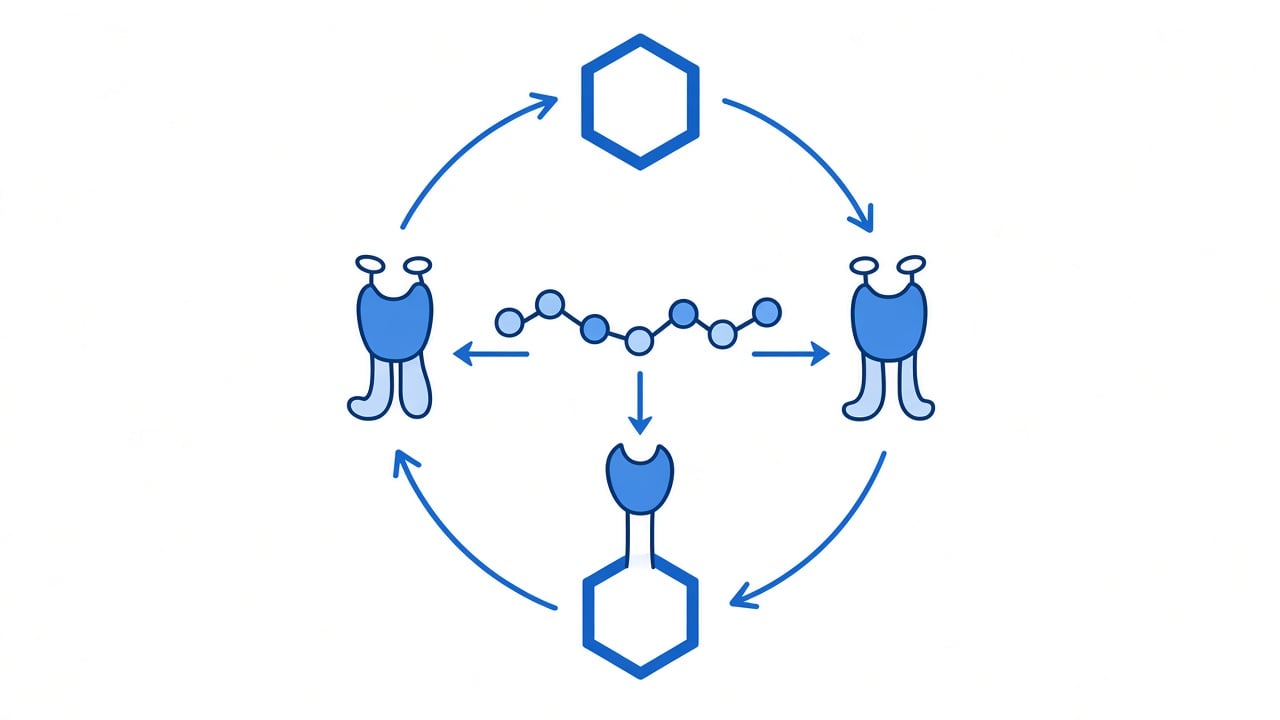
Retatrutide keeps appearing in news stories, Reddit threads and trial updates because it takes a familiar idea and adds a third part. Semaglutide is associated with GLP-1, tirzepatide works across GLP-1 and GIP, and retatrutide adds glucagon-receptor activity. Researchers call it a triple agonist. Online, people sometimes shorten that to “GLP-3”, but that is a nickname rather than the name of a real GLP-3 receptor.
The compound also appears in papers as LY3437943. It is one engineered molecule rather than three peptides mixed together, which is an easy detail to miss when comparisons are reduced to one-line social posts.
The question readers keep asking
The most common comparison is retatrutide versus tirzepatide. The simple answer is that tirzepatide targets two receptor families while retatrutide targets three. The more useful answer is that the extra glucagon activity changes the research question, so results cannot be predicted by treating retatrutide as a stronger or longer version of tirzepatide.
Trial communities are also unusually active. Participants swap notes about screening visits, long appointment schedules and what it is like to join a controlled study. Those first-person accounts make the process easier to picture, but they do not replace the published trial record. A personal result, good or bad, is still one person’s experience.
What is known, and what is still open
Early studies made retatrutide notable, but the larger TRIUMPH programme is what will answer the longer-term questions. Online posts often jump from an early result to a confident prediction about approval, timing or superiority. The honest version is less dramatic: several studies are still underway, each has its own population and endpoint, and results need to be read in that context.
For catalogue research, the practical takeaway is simple. Retatrutide, tirzepatide and semaglutide are different experimental tools. A receptor assay written for one should not silently substitute another. The product links below show the available research-vial sizes; this article is here to make the wider conversation easier to follow.
Need concentration maths for a labelled vial mass? Use the peptide calculator.
Matching research vials
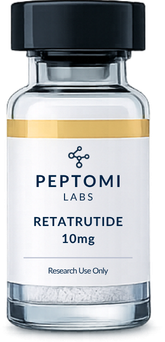
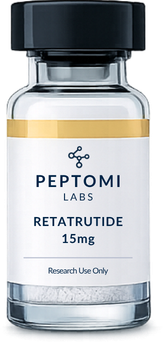
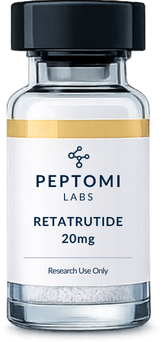
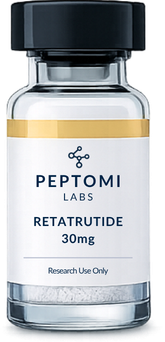
Peptomi Labs supplies research-grade materials for qualified laboratory use. These notes are not medical advice and they are not a protocol for human or veterinary use. Not for human or veterinary consumption.