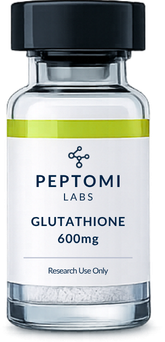
Glutathione is the body’s main intracellular antioxidant, a tripeptide of glutamate, cysteine and glycine made in every cell, studied for redox balance, detoxification pathways and oxidative stress models. Supplied as a lyophilised 600 mg vial for laboratory reconstitution.
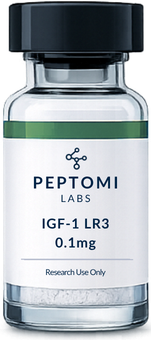
IGF-1 LR3 is a long-acting analogue of insulin-like growth factor 1, engineered so it does not bind IGF-binding proteins and therefore signals for longer, studied for IGF-1 receptor signalling, cell proliferation and anabolic pathways in muscle and cell models. Supplied as a lyophilised 0.1 mg vial, the smaller IGF-1 LR3 format, for laboratory reconstitution.
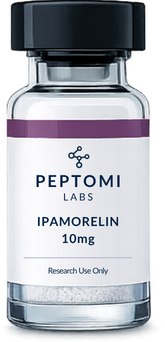
Ipamorelin is a synthetic five-amino-acid peptide that mimics ghrelin at the GHS-R1a receptor, studied as a selective growth hormone secretagogue with minimal cortisol and prolactin spillover in secretagogue models. Supplied as a lyophilised 10 mg vial for laboratory reconstitution.
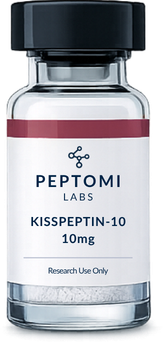
Kisspeptin is a naturally occurring peptide hormone made in the hypothalamus that triggers GnRH release, the first step in the reproductive hormone cascade, studied for GnRH pulse initiation, HPG axis regulation and reproductive endocrinology. Supplied as a lyophilised 10 mg vial for laboratory reconstitution.
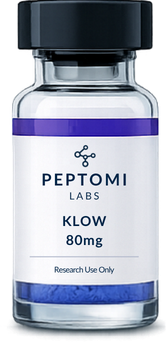
KLOW Blend is a four-peptide blend of 50 mg GHK-Cu, 10 mg BPC-157, 10 mg TB-500 and 10 mg KPV in one vial, adding the anti-inflammatory α-MSH fragment KPV to the Glow formula for dermal matrix, tissue-repair and inflammation-balance research. Supplied as a lyophilised 80 mg vial for laboratory reconstitution.
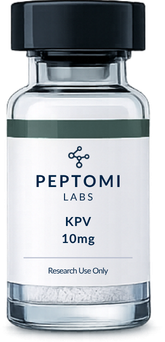
KPV (Lys-Pro-Val) is the three-amino-acid end fragment of α-MSH, the melanocyte-stimulating hormone, studied for anti-inflammatory signalling, skin barrier function and immune modulation in cell culture and gut models. Supplied as a lyophilised 10 mg vial for laboratory reconstitution.
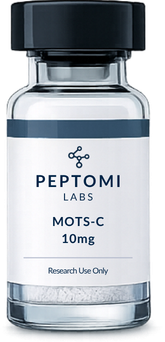
MOTS-c is a mitochondrial-derived peptide, 16 amino acids encoded in mitochondrial DNA rather than the cell nucleus, studied for metabolic regulation, exercise-mimetic signalling and AMPK-related energy pathways in laboratory models. Supplied as a lyophilised 10 mg vial for laboratory reconstitution.
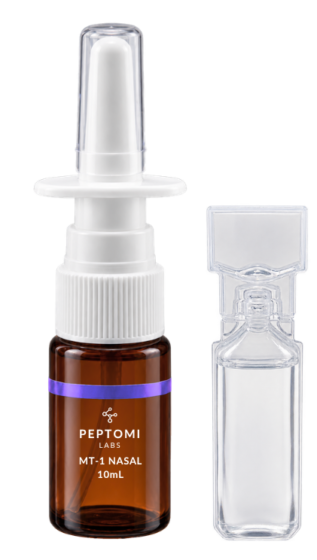
MT-1 (Melanotan I, afamelanotide) is a synthetic analogue of α-MSH, the hormone that signals melanocytes to produce melanin, studied for melanogenesis and photoprotection pathways. 10 mg vial supplied with sterile saline for intranasal research preparation.
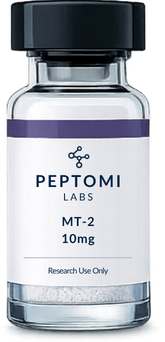
MT-2 (Melanotan II) is a shorter, cyclic synthetic analogue of α-MSH that acts on several melanocortin receptors rather than MC1R alone, studied for pigmentation, appetite signalling and wider melanocortin pathway research. Supplied as a lyophilised 10 mg vial for laboratory reconstitution.
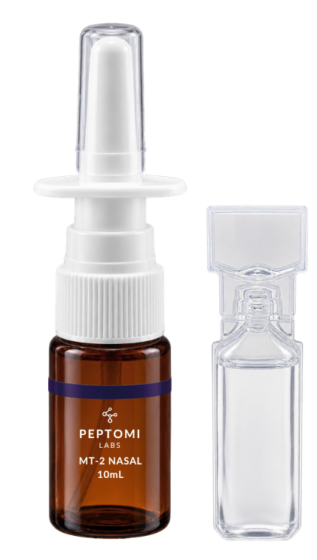
MT-2 (Melanotan II) is a shorter, cyclic synthetic analogue of α-MSH that acts on several melanocortin receptors, studied for pigmentation, appetite signalling and melanocortin pathway research. 10 mg vial supplied with sterile saline for intranasal research preparation.
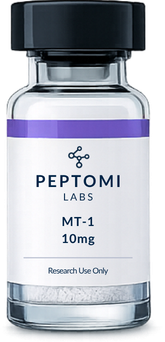
MT-1 (Melanotan I, afamelanotide) is a synthetic analogue of α-MSH, the hormone that signals melanocytes to produce melanin, studied for melanogenesis, MC1R signalling and photoprotection pathways in dermal research models. Supplied as a lyophilised 10 mg vial for laboratory reconstitution.