
Research journal
NAD+ vs NAD
NAD+, NADH, NMN and NR often get bundled into the same longevity conversation. This is a plain-English tour through the names, the claims people debate online, and the differences that actually matter.
Why the names become confusing so quickly
Spend ten minutes reading longevity blogs and you will meet NAD, NAD+, NADH, NMN and NR, often in the same paragraph. Reddit questions usually start with a fair point: are these all different names for the same thing? Not quite. NAD+ and NADH are two forms of the same coenzyme, while NMN and NR are smaller precursor molecules used by cells to make NAD+.
The plus sign is not a premium version or a marketing grade. It describes the oxidised form. NADH is the reduced form, and cells move between the two as they transfer electrons. “NAD” is often used as an umbrella term, which is convenient in conversation but frustrating on a product label.
The supplement aisle is a different conversation
A bottle advertised as an “NAD booster” commonly contains NR or NMN rather than NAD+ itself. That is deliberate: the research question is whether a precursor can raise the body’s NAD+ pool. A clinic infusion and a dry research vial are different again. Reviews that treat capsules, infusions and laboratory NAD+ as interchangeable are comparing unlike products.
Community discussions are useful for spotting this confusion, but claims about energy, focus or ageing are mostly personal reports unless they are tied to a controlled study. Human trials have shown that some precursors can change blood NAD-related measurements; whether that reliably turns into a noticeable health outcome is a separate and much less settled question.
Why researchers still care about it
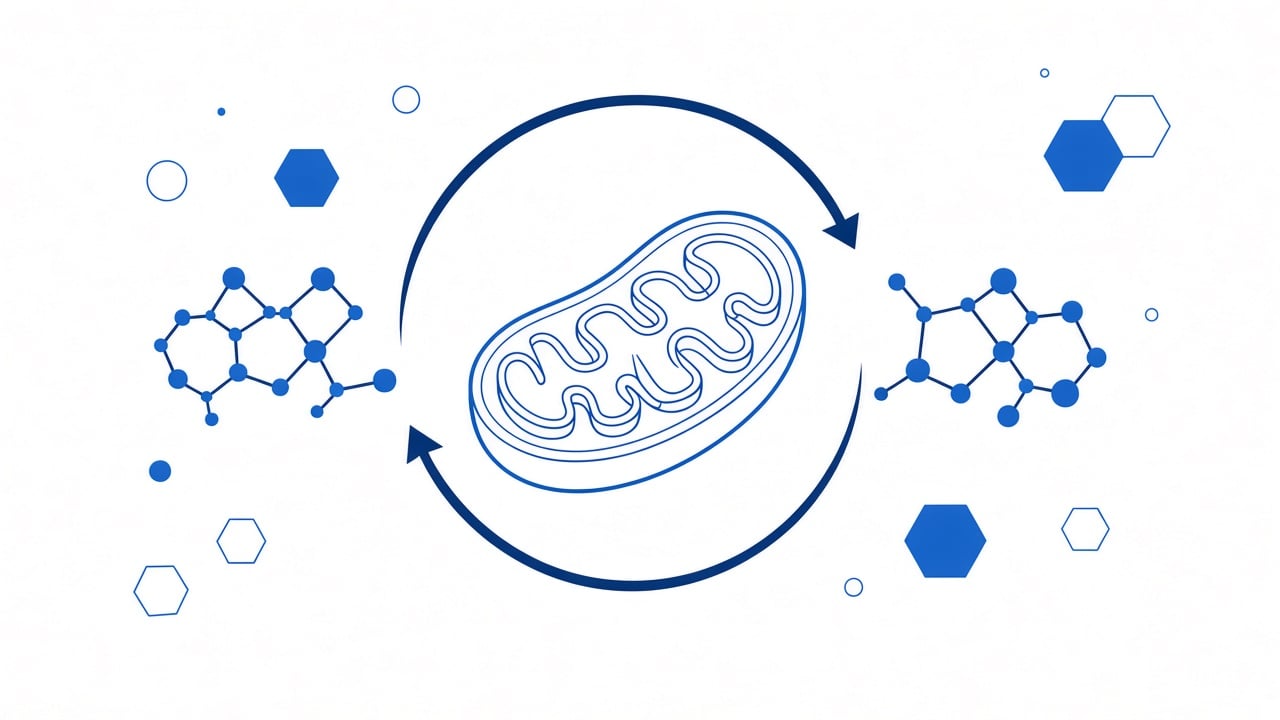
NAD+ sits at the centre of energy metabolism and also supplies enzymes involved in DNA repair and cellular signalling. That combination explains why it turns up in research on mitochondria, ageing and metabolic stress. It is a cofactor, not a peptide, despite sharing shelf space with peptide products.
For a laboratory, choosing NAD+, NADH, NR or NMN is not a lifestyle preference; it changes the experiment. The two vial sizes linked below contain the same oxidised cofactor at different fill masses. The useful first step is to decide which molecule a method actually calls for, then ignore the broad “NAD” shorthand.
Need concentration maths for a labelled vial mass? Use the peptide calculator.
Matching research vials
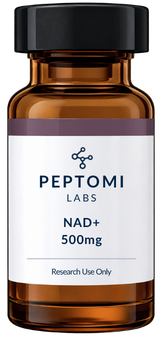
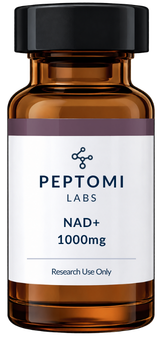
Peptomi Labs supplies research-grade materials for qualified laboratory use. These notes are not medical advice and they are not a protocol for human or veterinary use. Not for human or veterinary consumption.