
Research journal
GLOW vs KLOW vs GHK-Cu
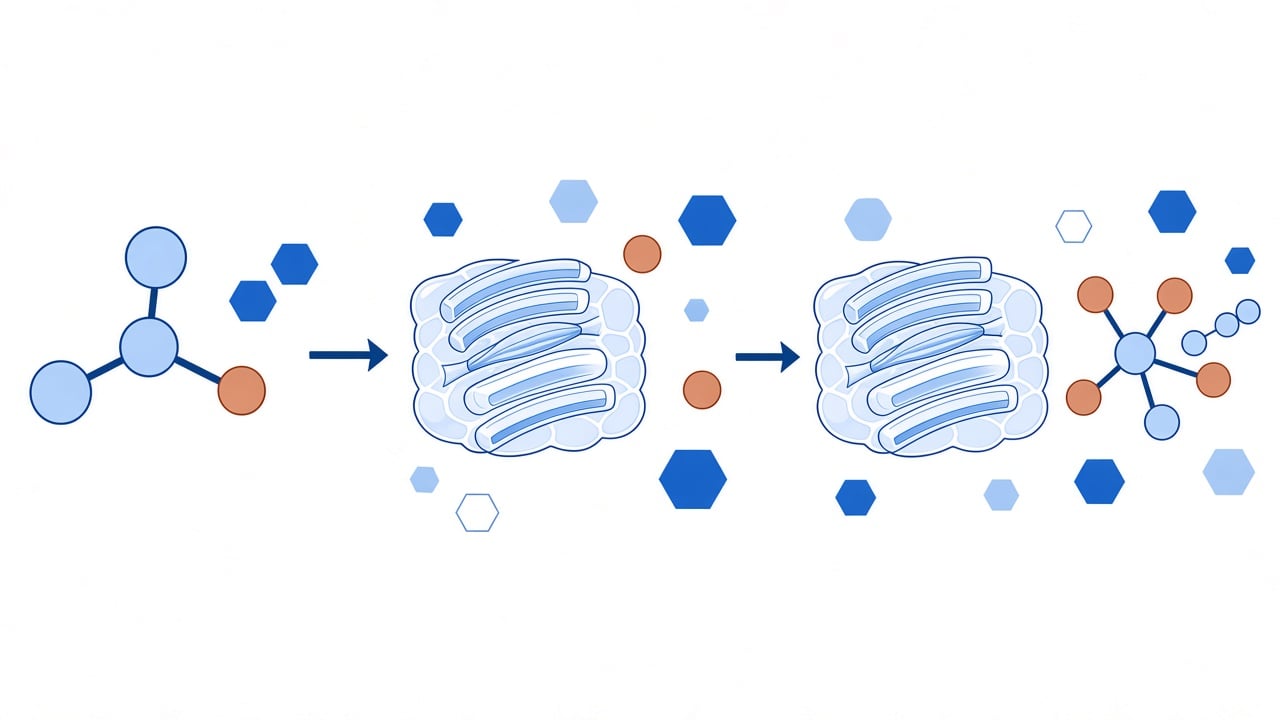
GLOW, KLOW and GHK-Cu share one recognisable copper peptide, but they are not three strengths of the same product. Each added component changes what is in the vial, what can be measured, and how confidently a result can be assigned to one molecule.
The ingredient list is the real comparison
Standalone GHK-Cu contains one copper-binding tripeptide. GLOW combines GHK-Cu, BPC-157 and TB-500 in one vial. KLOW contains those same three components and adds KPV. The names are convenient catalogue shorthand; the ingredient list defines the experimental material.
That means KLOW is not simply a stronger GLOW, and GLOW is not a larger dose of GHK-Cu. Each step adds another sequence, another literature trail and another possible contributor to an assay result. Combined fill mass should not be mistaken for the amount of any one component.
What each added peptide brings to the question
GHK-Cu anchors the comparison in copper-peptide, extracellular-matrix and collagen-related research. GLOW adds BPC-157 and TB-500, compounds discussed in preclinical tissue-repair, angiogenesis, actin and cell-migration work. KLOW then adds KPV, a three-amino-acid fragment studied in inflammatory and epithelial-barrier models.
Those descriptions come mainly from studies of individual compounds, not proof that the fixed blends reproduce or amplify every component result. “Synergy” is a testable outcome, not something guaranteed by placing several promising mechanisms in one vial.
More components mean less attribution
Standalone GHK-Cu gives the cleanest design when the endpoint is specifically copper-peptide activity. GLOW is appropriate when the experiment asks about the three-component material. KLOW belongs in a four-component comparison where the addition of KPV is itself part of the question.
Controls become more important as the blend grows. Without standalone and matched-blend comparators, a change cannot be assigned confidently to GHK-Cu, the repair-associated pair, KPV or an interaction. Product colour, marketing name and total mass cannot solve that attribution problem.
Need concentration maths for a labelled vial mass? Use the peptide calculator.
Matching research vials
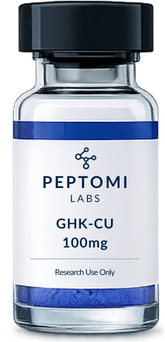
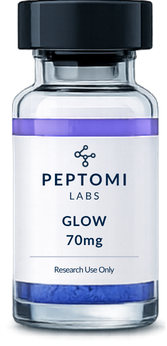
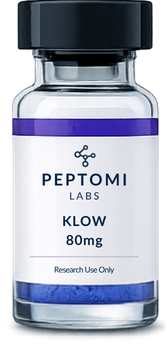
Peptomi Labs supplies research-grade materials for qualified laboratory use. These notes are not medical advice and they are not a protocol for human or veterinary use. Not for human or veterinary consumption.