
Research journal
BPC-157 vs TB-500
BPC-157 and TB-500 are bundled together so often online that they can sound interchangeable. They are not. This guide separates their origins, the laboratory questions attached to each, and the gaps hidden by the familiar “recovery peptide” label.
The names hide two different origins
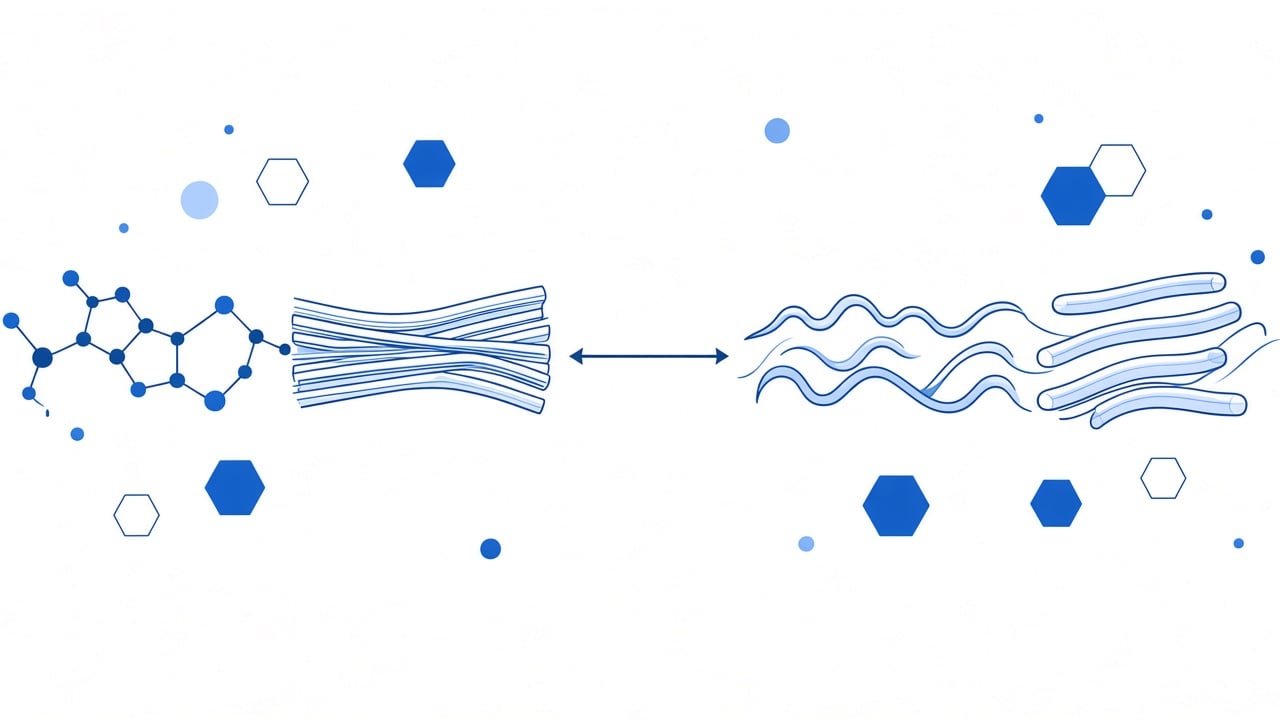
BPC-157 is a synthetic 15-amino-acid peptide based on a sequence reported in gastric research. TB-500 is discussed as a short, synthetic peptide related to thymosin beta-4, a much larger naturally occurring protein. Calling both “repair peptides” describes the conversation around them, not a shared structure.
That distinction matters when reading papers. A result for full thymosin beta-4 is not automatically a result for TB-500, just as a broad claim about stomach-derived protective factors is not automatically evidence for every BPC-157 product. Search terms that blur those identities can make the literature look larger than it is.
What each research trail actually studies
BPC-157 papers are dominated by cell and animal models involving tendon, muscle, gut tissue, blood-vessel signalling and wound repair. TB-500 discussions lean on actin biology, cell migration and the wider thymosin beta-4 literature. Both trails are mostly preclinical, and direct human evidence for the catalogue compounds remains limited.
Online summaries often reduce this to “BPC is local and TB-500 is systemic.” That is a useful memory aid, not a settled pharmacology rule. Route, model, endpoint and the exact molecule all affect what a study can show. A forum observation cannot establish where a peptide acted or which pathway caused a change.
Why the comparison became a combination
Communities pair the peptides because the proposed pathways sound complementary. The idea is easy to understand, but two separate preclinical stories do not automatically add up to a proven blend. A 2026 exploratory rat Achilles-tendon study tested both compounds and their combination rather than assuming that logic.
In that study, the combined group showed some histological differences from control but did not produce an additional benefit over the individual agents. One small animal experiment cannot close the question, yet it is a useful reminder: BPC-157, TB-500 and a fixed blend are three different experimental materials and should be evaluated separately.
Need concentration maths for a labelled vial mass? Use the peptide calculator.
Matching research vials
Peptomi Labs supplies research-grade materials for qualified laboratory use. These notes are not medical advice and they are not a protocol for human or veterinary use. Not for human or veterinary consumption.