
Research journal
GHK-Cu vs AHK-Cu
GHK-Cu and AHK-Cu are both three-amino-acid copper complexes, which makes them easy to collapse into one “blue peptide” category. Their sequences are different, their research footprints are different, and a result attached to GHK-Cu does not automatically belong to AHK-Cu.
One amino acid changes the name
GHK-Cu is the copper complex of glycine-histidine-lysine. AHK-Cu uses alanine-histidine-lysine. Both are copper-binding tripeptides, and both can produce blue or blue-green material, but replacing glycine with alanine creates a different ligand and a different research compound.
Colour confirms that copper chemistry is present; it does not identify purity, concentration or biological equivalence. Finished cosmetics add even more variables, so a serum review cannot be read as evidence for a weighed laboratory powder simply because both ingredient lists mention a copper peptide.
The evidence is much larger for GHK-Cu
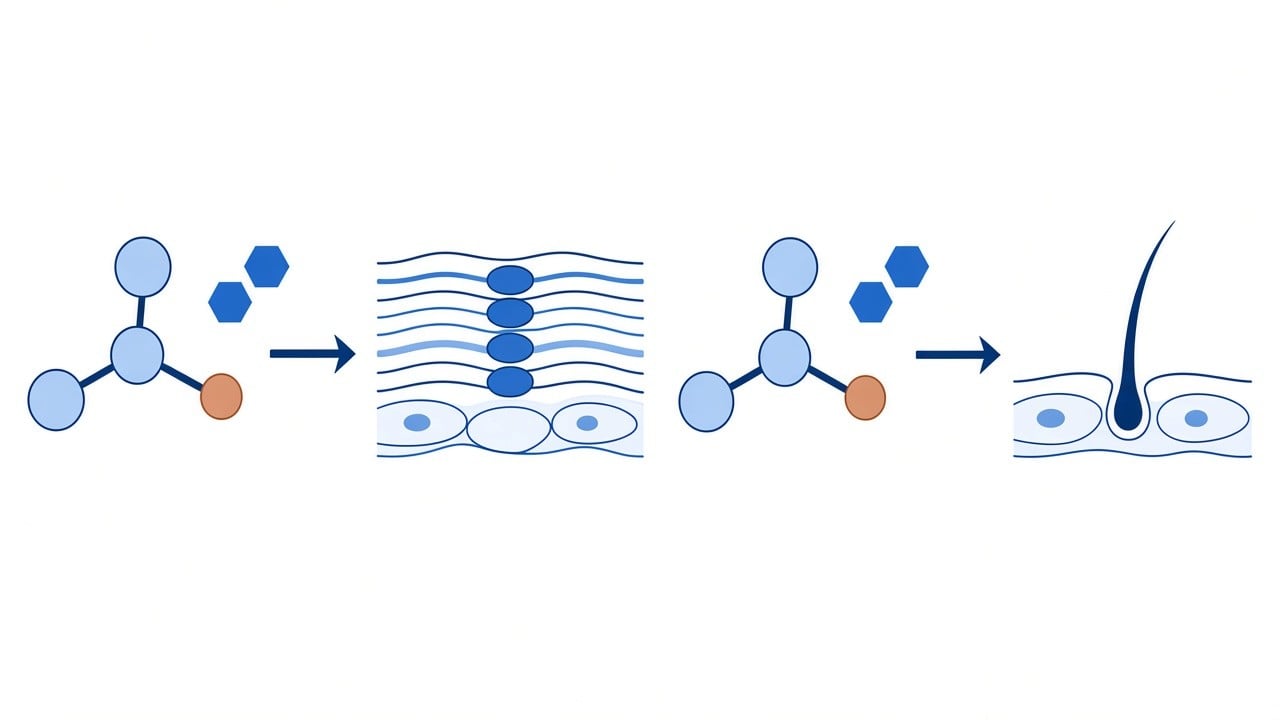
GHK-Cu has a broad preclinical literature involving extracellular matrix, collagen-related signalling, wound models, gene expression and skin-cell research. AHK-Cu appears more narrowly in follicle and hair-related experiments. The smaller evidence base is not proof that AHK-Cu is weaker; it means fewer questions have been tested.
Blogs often transfer a GHK-Cu claim to AHK-Cu under the umbrella term “copper peptide.” That shortcut is not justified without direct data. Similar size and metal binding can support a comparison, but they cannot supply a missing experiment.
Choose by sequence and endpoint
GHK-Cu is the better-documented choice when a method names GHK, matrix signalling or the classic plasma tripeptide. AHK-Cu belongs in work that specifically asks about AHK, including follicle-cell models. Powder and vial sizes change handling and formulation, not the peptide’s identity.
A useful comparative design keeps copper concentration, vehicle and assay conditions controlled while changing the peptide ligand. Without those controls, a colour difference or cellular response cannot be assigned confidently to GHK versus AHK.
Need concentration maths for a labelled vial mass? Use the peptide calculator.
Matching research vials
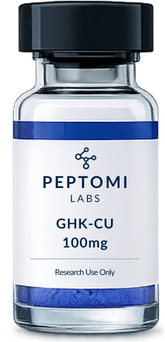
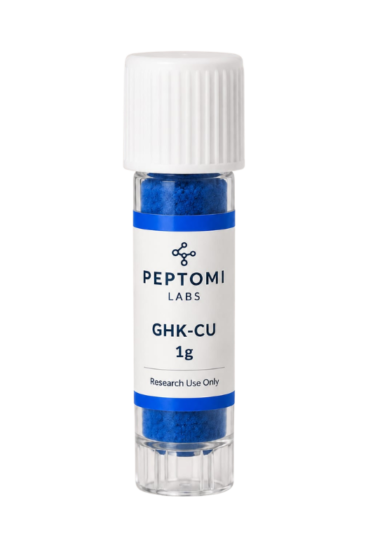
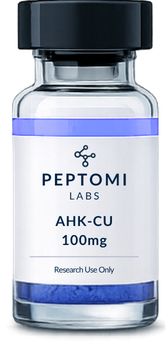
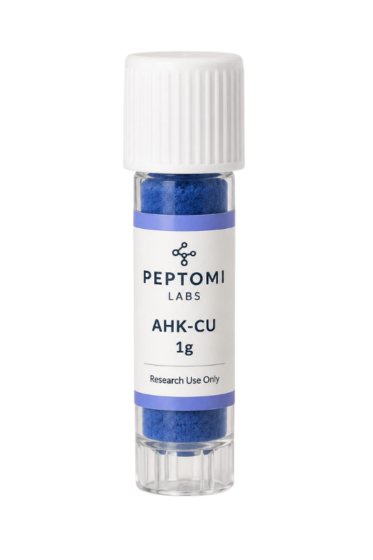
Peptomi Labs supplies research-grade materials for qualified laboratory use. These notes are not medical advice and they are not a protocol for human or veterinary use. Not for human or veterinary consumption.