
Research journal
MT-1 vs MT-2 vs PT-141
MT-1, MT-2 and PT-141 sit on the same melanocortin family tree, so online comparisons often blur them together. Their receptor profiles and research histories split in important ways, especially once the conversation moves beyond pigmentation.
Three branches of the melanocortin family
MT-1, commonly associated with afamelanotide, is a linear analogue of alpha-MSH developed around melanocortin-1 receptor activity and pigmentation biology. MT-2 is a shorter cyclic analogue with broader melanocortin-receptor activity. PT-141, or bremelanotide in clinical literature, was developed from the MT-2 research line.
Shared ancestry explains why the structures and names travel together. It does not make them equivalent. Receptor selectivity, sequence shape and development history determine which paper belongs to which compound.
Pigment pathways versus central signalling
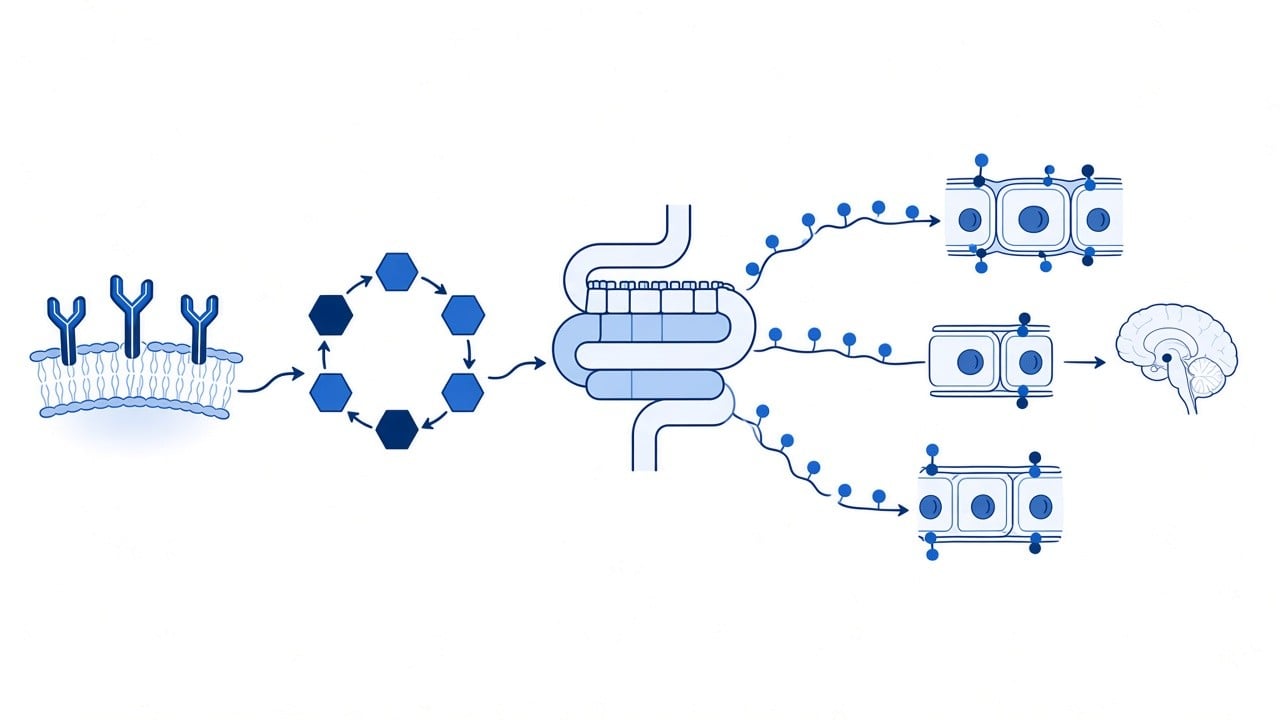
MT-1 research is closely tied to MC1R and melanogenesis. MT-2 can activate several melanocortin receptors, which is why research discussions extend into appetite and central effects as well as pigmentation. PT-141 shifted attention toward central MC3R and MC4R signalling rather than using skin colour as the primary endpoint.
Forum shorthand often treats PT-141 as “MT-2 without tanning” or ranks the three by strength. That skips receptor pharmacology and ignores formulation, route and study design. A related analogue can retain some activities, lose others and create a different evidence base.
Approval and product format are separate questions
Prescription afamelanotide has a narrow approval for erythropoietic protoporphyria, and prescription bremelanotide has a defined approval for acquired, generalised HSDD in premenopausal women. Those product-specific decisions do not approve cosmetic MT-1, MT-2, or every material sold under a related research name.
The catalogue includes lyophilised and nasal formats for these research names. A nasal spray adds saline, device delivery and stability variables; it does not transform MT-2 into PT-141 or make evidence from one route automatically apply to another.
For a clean study, name the exact analogue, receptor question and format. Use MT-1, MT-2 and PT-141 as related comparators when that relationship is the experiment—not as interchangeable labels for one generic melanocortin peptide.
Need concentration maths for a labelled vial mass? Use the peptide calculator.
Matching research vials
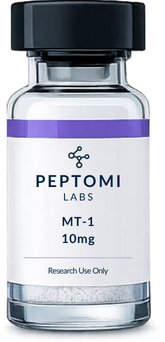
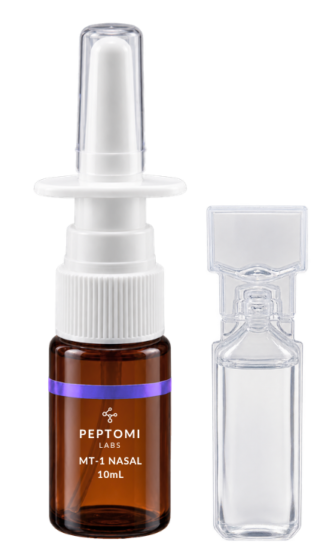
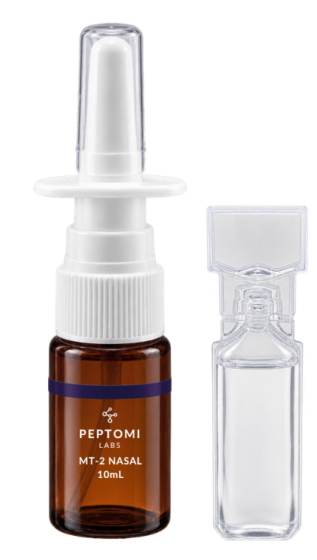
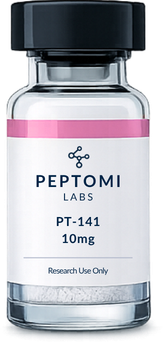
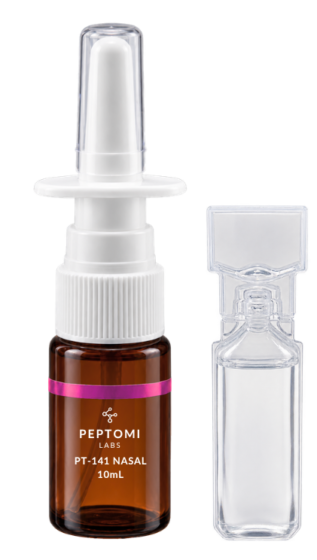
Peptomi Labs supplies research-grade materials for qualified laboratory use. These notes are not medical advice and they are not a protocol for human or veterinary use. Not for human or veterinary consumption.