
Research journal
GHK-Cu copper peptide
GHK-Cu is the vivid blue copper peptide that keeps turning up in skincare feeds. We looked past the before-and-after posts to explain what it is, why colour starts arguments, and what researchers are interested in.
The blue peptide all over skincare feeds
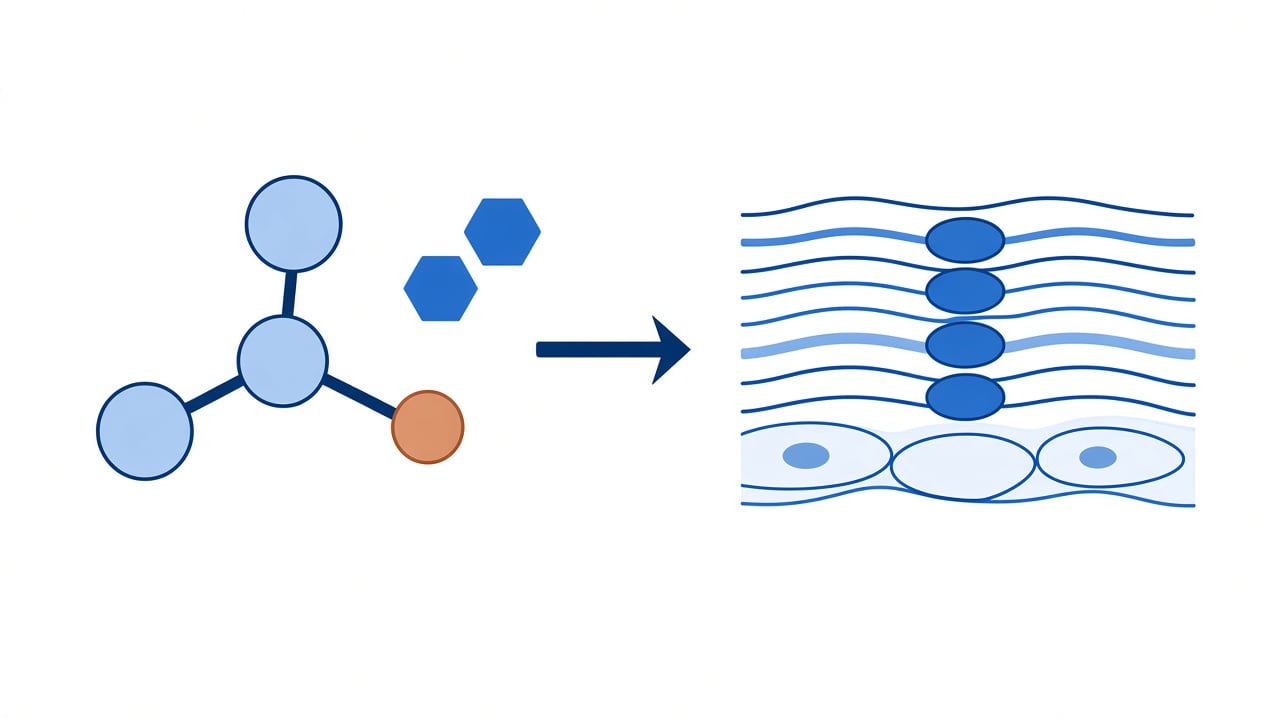
GHK-Cu has escaped the research world and become a skincare talking point. The name is simpler than it looks: GHK is a three-amino-acid peptide — glycine, histidine and lysine — bound to copper. That copper complex is why the material is associated with a distinctive blue or blue-green colour.
Blogs usually discuss finished face serums. Research papers are more likely to discuss fibroblasts, collagen-related signals, wound models or gene expression. A weighed laboratory solid and a multi-ingredient cosmetic can both mention GHK-Cu while being completely different products.
Can you judge it by the colour?
This question appears constantly in skincare forums: does darker blue mean a stronger or better product? Colour can tell you that a copper complex is present, but it is not a certificate of concentration or purity. Dilution, lighting, pH and the rest of a formula can all change what you see. A dramatic cobalt photograph is not a substitute for an ingredient list or batch testing.
That is also why two community posts can sound certain and still disagree. One person sees a pale serum and calls it fake; another points out that peptides may be used at low concentrations. The sensible takeaway is to treat colour as a clue, not a lab result.
What the research conversation is really about
Researchers have used GHK-Cu in models involving extracellular matrix, collagen-related activity and tissue repair. The interesting part is not simply that “copper is good for skin”; it is that this small peptide binds copper and behaves as a defined signalling complex.
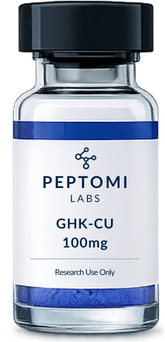
GHK-Cu is also easy to confuse with AHK-Cu and with blends that list several peptides together. They may share a colour family or appear in the same online discussions, but they are not silent substitutes. The links below are for standalone GHK-Cu research material in two pack sizes.
Need concentration maths for a labelled vial mass? Use the peptide calculator.
Matching research vials
Peptomi Labs supplies research-grade materials for qualified laboratory use. These notes are not medical advice and they are not a protocol for human or veterinary use. Not for human or veterinary consumption.